Prof. Elisha Moses
Treating living neuronal cultures as physical systems—and asking whether they can be wired into logic
Research
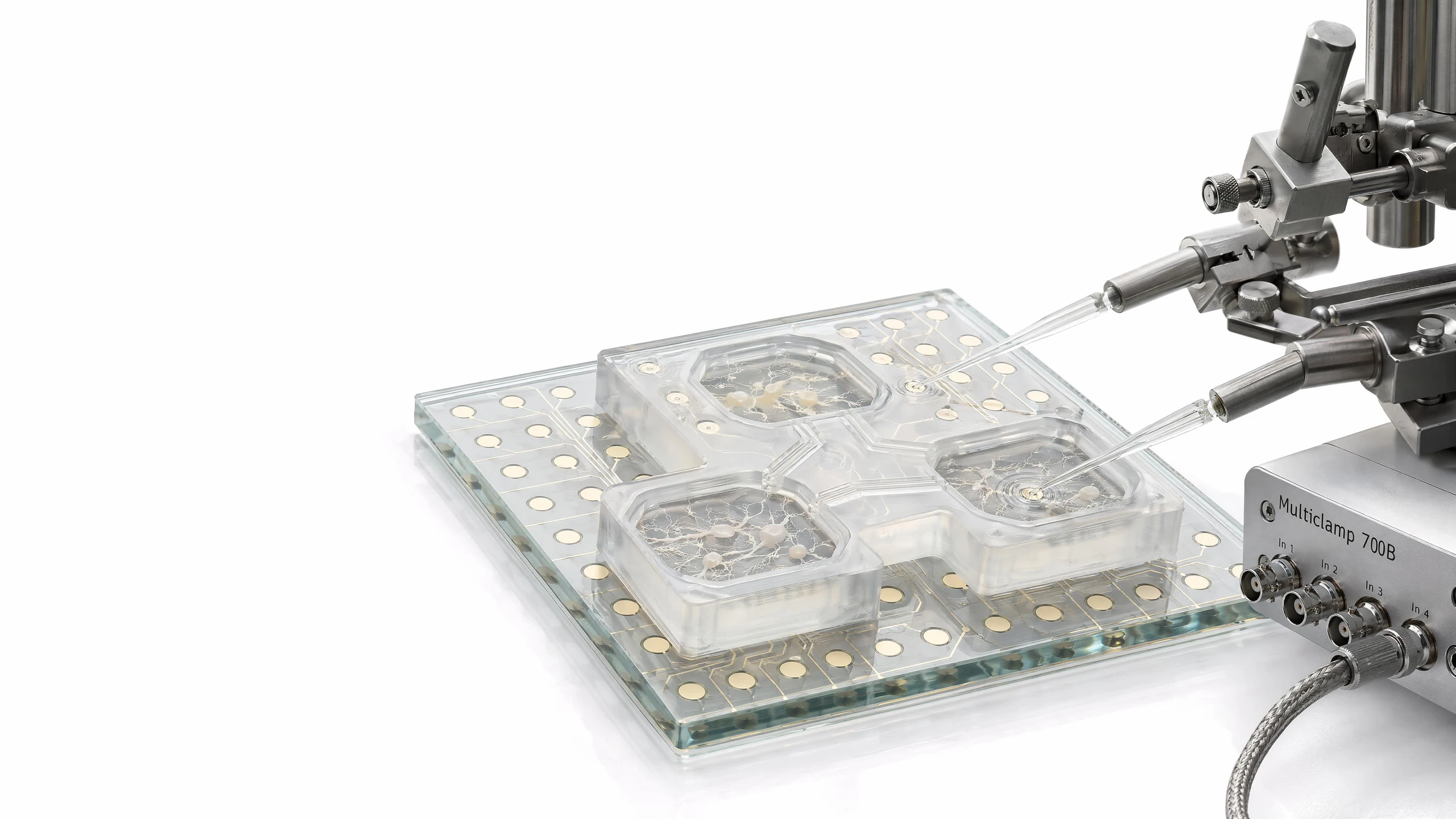
The group studies neuronal networks as physical systems, using cultures of dissociated neurons grown on multi-electrode arrays and patterned substrates to ask how computation and collective dynamics emerge from many coupled excitable cells. By shaping connectivity, stimulating subpopulations, and reading out spiking activity, the lab probes how a culture integrates inputs, propagates activity bursts, and can be coaxed into performing elementary logical operations—effectively asking what it takes to build a device from living neural tissue.
A second thread develops physical tools to stimulate and observe neural activity, combining magnetic stimulation with optical and electrical measurement of the response. Because magnetic fields penetrate tissue with minimal attenuation, understanding how induced currents excite neurons connects directly to the physics of transcranial magnetic stimulation and to noninvasive readout of brain dynamics. Together these lines treat the nervous system as a substrate whose excitability, geometry, and noise set the rules for both natural function and engineered behavior.
Group members
The named roster for each group is generated from the People directory, filtered by this group.
Selected publications
Representative papers from the group — the full record is drawn from ORCID & Google Scholar.
Representative selection — browse the full department list on the Publications page.