Prof. Ofer Firstenberg
Teaching individual photons to feel one another inside dense, coherent clouds of atoms
Research
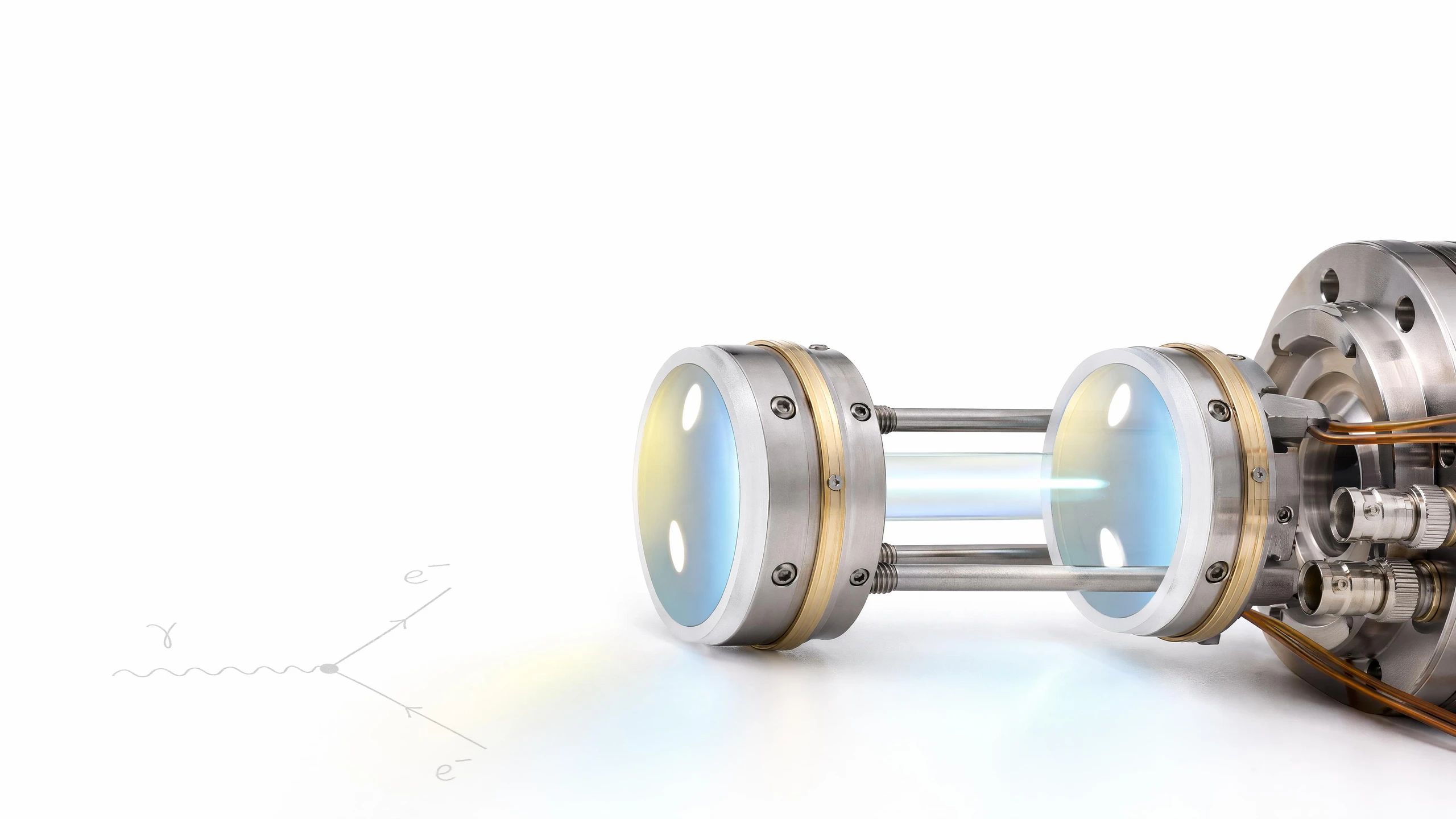
Light and matter normally barely interact, and photons in vacuum pass straight through one another. The group studies regimes where this changes: by coupling light to dense ensembles of cold or hot atoms, and by mapping photons onto highly excited Rydberg states, individual photons can be made to interact strongly, scatter, bind, or block one another. The central goal is to understand and control these nonlinearities at the level of single quanta, turning a diffuse atomic gas into an optical medium with effective photon-photon forces.
This matter lies at the boundary between quantum optics, atomic physics, and many-body physics, and it underpins practical capabilities: deterministic single-photon sources and gates for photonic quantum information, quantum memories that store and retrieve light coherently, and atomic sensors that read out fields and rotations at fundamental limits. Working across both ultracold samples and room-temperature vapor cells, the group asks how coherence survives motion, collisions, and thermal noise, and how it can be engineered to make light itself behave as an interacting quantum system.
Group members
The named roster for each group is generated from the People directory, filtered by this group.
Selected publications
Representative papers from the group — the full record is drawn from ORCID & Google Scholar.
Representative selection — browse the full department list on the Publications page.